Text, Mummification in Egypt
Neues MuseumMummification was the customary practice from the third Dynasty (2705 - 2640 BC) and was meant for full preservation of the body for the three spirits, Ka, Ba and Akh. The internal organs were placed in four vessels (canopic jars), each assigned to one of four deities for safekeeping. The sarcophagi in shape of a box, prevalent in the early dynasties, were later superseded by the human-shaped coffins until the box form became popular again in Greek and Roman times. In Roman times wooden boards bearing the features of the deceased (mummy portraits) were placed on the mummies to serve the purpose of identification.
Featured in the picture(s):
Ancient Egyptian Sarcophagus
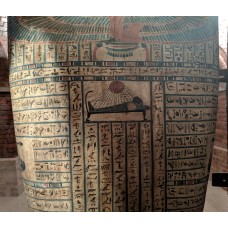
Ancient Egyptian SarcophagusAt the center of the scene is a recumbent figure of the deceased,...
Read moreWould you like to explore the origin of Christ’s cross?
Click here: thesimpleanswers.com/the-true-cross/
Click here: thesimpleanswers.com/the-true-cross/
