Text, Victory stele of Esarhaddon
Germany, Museum Island, Berlin, Pergamon MuseumVictory stele of Esarhaddon, Pergamon Museum, Museum Island, Berlin. Basalt. Sam'al/Zincirli (Turkey), 671 BCE. Purchase 1855, VA 2708. At the height of his power, the Assyrian king Esarhaddon (680-669 BCE) led his troops all the way to Egypt to subdue his rival, Taharga. During the campaign, he plundered Memphis, taking captive the Egyptian crown prince _, On the homeward march, the king also stopped several times in Syria to exact _ and tribute from the rulers of Syrian cities. To commemorate this successful campaign, he erected a number of victory stelae, including this one at Sam'al. The message of the stele would have been obvious, even to those who could not read: the fate of the two prisoners on the obverse, with their mouths gagged and their feet shackled, was intended to deter any vassals wishing to free themselves from Assyrian rule. The stele also bore a message about the internal politics of the empire: by showing, on the side panels, the crown princes Shamash-shum-ukin and
Victory stele of Esarhaddon, Pergamon Museum, Museum Island, Berlin
Featured in the picture(s):
Victory stele of Esarhaddon, winged disc, sun, crescent
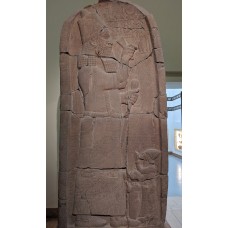
Victory stele of Esarhaddon, Pergamon Museum, Museum Island, BerlinBasaltSam'al/Zincirli...
Read moreClick here: thesimpleanswers.com/the-true-cross/
